
How to Handle Sales Objections: A Practical B2B Guide
Nov 10, 2026
"We like what you do. But your competitor is 30% cheaper."
That can mean three very different things: the buyer has a hard budget limit, the competitor offers a better deal, or you have not made the extra cost worth paying. Respond with a discount before finding out which, and you may solve the wrong problem. Good sales objection handling starts by diagnosing the concern, not defeating the buyer.
This guide gives you a five-step approach, realistic replies to ten common B2B objections, and ways to deal with procurement, security teams and buyers who simply are not a fit. The examples are illustrative conversations, not customer transcripts.
What is a sales objection?
A sales objection is a buyer’s expressed reason for hesitating or not moving forward. It may concern price, product fit, risk, timing or approval. Some objections can be answered with evidence. Others are real constraints that a persuasive answer cannot remove.
Before reaching for a script, work out what kind of response you have heard:
A question or misunderstanding
“Does this integrate with Salesforce?” Answer the specific question, and demonstrate it where possible.
An unresolved concern
“How do we know the rollout won’t disrupt our team?” Explore the risk and agree on the evidence needed.
A real constraint
“Our budget is frozen until January.” Confirm the restriction and decide whether revisiting later makes sense.
A poor fit
“We need an on-premise deployment, and that is mandatory.” If your product cannot support it, say so.
A brush-off
“Send me something.” It could signal interest, politeness or a wish to end the conversation. Respect the context rather than forcing another question.
A buyer saying no is not automatically asking you to overcome their resistance. Sometimes the professional response is to answer, step back or stop.
How to handle a sales objection in five steps
The five steps are listen, clarify, acknowledge, respond and confirm. Think of them as a way to understand the decision, not a script you must perform in order.
1. Listen without preparing a rebuttal
Let the buyer finish. “This is expensive” and “This is expensive because implementation is not included” are not the same objection. Capture their wording and what it might imply, without assuming you know the answer.
2. Clarify what is actually at stake
Ask a question that changes what you know. For price, try: “Is the concern the total budget, or whether the additional cost is justified?” If the answer is already in the buyer’s email, do not make them repeat it.
3. Acknowledge the trade-off
Show you understand what the buyer risks. “You are concerned about committing budget before the team has proved adoption” is more useful than a rehearsed “I totally understand.”
4. Respond with relevant, checkable proof
Match the proof to the concern. A security requirement needs documentation or a technical review, not an enthusiastic case study. A price challenge might call for a scoped comparison or value calculation with assumptions visible. Do not invent ROI numbers.
5. Agree on the decision or next action
“Does that answer the technical question?” checks understanding. “Can your security lead confirm whether this meets their requirement?” checks whether the barrier is actually moving. Those are different milestones. If the answer is no, record what remains unresolved.
One example: A buyer says implementation will take too long. You clarify that their concern is a launch deadline, acknowledge the risk, share a realistic rollout plan with dependencies, and ask whether the proposed timeline meets the date that matters. If it cannot, be clear about that too.
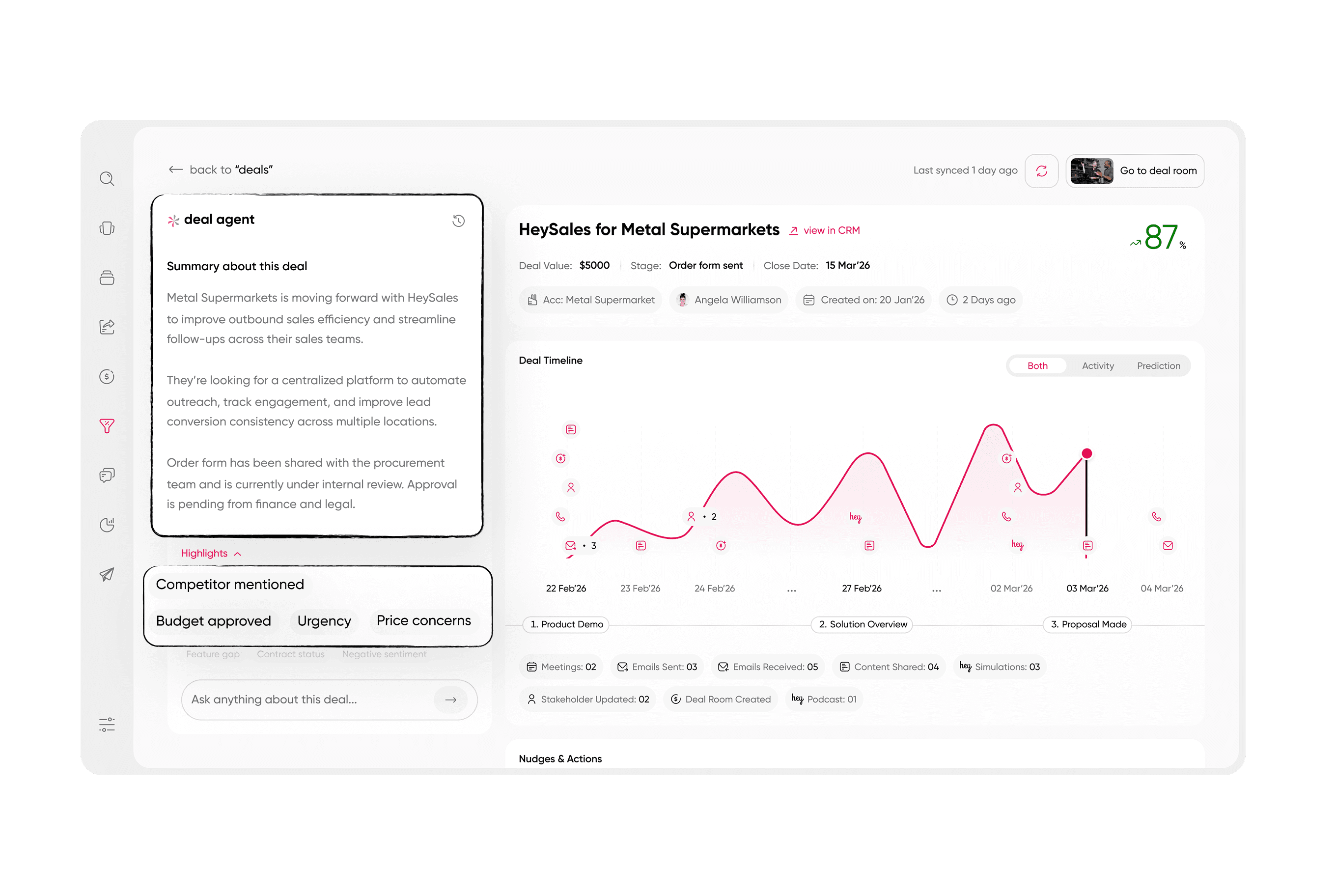
10 common B2B sales objections, with responses that go beyond the first question
These are examples of how a conversation could unfold. Adapt the language to the relationship, your product and what you can actually prove. The objective is not to produce a clever comeback; it is to find out whether the deal can move forward.
1. “Your competitor is 30% cheaper.”
What might be behind it: Price can signal a genuine budget cap, different scope or unclear incremental value.
Buyer: “Your competitor is 30% cheaper.”
Rep: “That’s a substantial gap. Are we comparing the same scope, including implementation and support?”
Buyer: “Mostly. Their reporting is limited, but we can manage.”
Rep: “How does your team produce those reports today? We can look at the effort involved and decide whether the difference is worth paying for.”
What to bring or do next: Compare scope and measurable cost of the current process. If the buyer has a strict cap, explore a smaller scope only if it actually works. Do not manufacture savings to defend the price.
2. “We already use another tool.”
What might be behind it: The real obstacle may be switching effort, contract lock-in or simply a current product that works well.
Buyer: “We have a tool for that.”
Rep: “What’s working well with it?”
Buyer: “The team knows it. Reporting is the painful part.”
Rep: “If reporting is the only gap, is fixing that worth changing platforms, or would improving the current setup be easier?”
What to bring or do next: A focused comparison, migration requirements and the costs of switching. If the current tool meets the need, recognize that.
3. “Security won’t approve this.”
What might be behind it: This could be a specific control, a lengthy review process or a non-negotiable technical requirement.
Buyer: “Our security team won’t sign off.”
Rep: “Do you know which requirement is blocking approval?”
Buyer: “They need clarity on data retention and access controls.”
Rep: “We can share the current documentation and bring the relevant technical owner into the review. Could we confirm the exact controls they need?”
What to bring or do next: Current security documentation, an approved questionnaire response and access to a qualified technical owner. Never promise compliance or functionality you cannot substantiate.
4. “We can’t justify the ROI.”
What might be behind it: A claim about savings is not the same as a defensible business case.
Buyer: “The CFO won’t approve this without a return.”
Rep: “Which outcome would finance want to put a number against?”
Buyer: “Time saved, but they won’t accept a vendor estimate.”
Rep: “Fair. Could we build the estimate using your current volumes, your cost assumptions and a conservative adoption scenario?”
What to bring or do next: A transparent model showing inputs, uncertainty and downside scenarios. Let the buyer own the assumptions. If the case does not hold, do not force the math.
5. “Implementation will take too long.”
What might be behind it: The buyer may be worried about disruption, resources or missing a fixed deadline.
Buyer: “We cannot handle a three-month implementation.”
Rep: “What must be live by your deadline?”
Buyer: “One sales team needs it before our new quarter.”
Rep: “Let’s see whether a limited rollout covers that requirement and what support your team would need. I don’t want to promise a date before checking dependencies.”
What to bring or do next: A phased plan, named owners, dependencies and realistic dates. A smaller rollout is useful only if it solves the immediate problem.
6. “Leadership isn’t convinced.”
What might be behind it: Your champion may understand the product but lack the internal argument or authority to secure agreement.
Buyer: “My VP isn’t sold.”
Rep: “What is their biggest concern?”
Buyer: “They think this adds another tool without changing outcomes.”
Rep: “Could we put together a one-page comparison of the current process, the proposed change and how success would be measured? Would a conversation with them be useful?”
What to bring or do next: A concise decision brief tailored to leadership priorities. Do not assume your champion can sell the case alone.
7. “We tried something like this and it failed.”
What might be behind it: A prior disappointment changes the burden of proof and the buyer’s tolerance for risk.
Buyer: “We bought similar software two years ago. Nobody used it.”
Rep: “What prevented adoption?”
Buyer: “It took too much work to set up.”
Rep: “Then setup and ownership should be the first things we evaluate. Can we walk through those requirements before discussing features?”
What to bring or do next: A practical onboarding plan, responsibilities and adoption milestones. A glowing customer quote will not solve a known implementation problem.
8. “We’re building this internally.”
What might be behind it: The choice may involve control, integration, staffing and future maintenance rather than license price.
Buyer: “Engineering plans to build it.”
Rep: “Which parts are most important to own internally?”
Buyer: “The workflow and our data.”
Rep: “That makes sense. Would it be useful to compare a build against buying, including maintenance, integration and the time to get the first team live?”
What to bring or do next: A build-versus-buy comparison that acknowledges legitimate reasons to build. Sometimes internal development is the better decision.
9. “The timing isn’t right.”
What might be behind it: A real priority conflict is different from a vague delay.
Buyer: “Maybe next quarter.”
Rep: “Is there a particular event next quarter that would make this easier to evaluate?”
Buyer: “Our budget gets reset then.”
Rep: “Understood. Would it help to agree on what information you’ll need ahead of that review, or is it better to reconnect after the budget is set?”
What to bring or do next: A mutually agreed trigger, not a calendar reminder masquerading as a buying signal. Respect a clear request to pause.
10. “Send me something. I’ll think about it.”
What might be behind it: This may be genuine information gathering or a courteous end to the conversation.
Buyer: “Just email the details.”
Rep: “Absolutely. I’ll send a short overview of the pricing and rollout we discussed.”
Buyer: “Thanks.”
Rep: “You’re welcome. If questions come up, I’m happy to help.”
What to bring or do next: Send what was requested, make it easy to understand and avoid demanding a meeting in exchange. If there is clear interest, offer a follow-up rather than presuming one.
Handling objections across a buying committee
In B2B sales, the person raising the objection may not be the person who can resolve it. A champion can support the purchase while finance, security and procurement each have a separate decision to make. Treating “the buyer” as one person leaves those concerns invisible until late in the deal.
- Finance: Document the cost, assumptions and trade-offs, including what happens if the project is delayed.
- IT and security: Map requirements to verified technical answers and identify who signs off.
- Operations and end users: Explain implementation, workflow changes and ownership.
- Procurement and legal: Clarify purchasing requirements, contract terms and the approval timeline.
Ask your contact who needs to evaluate the proposal, what each group needs to see and whether a direct discussion would help. Give them a forwardable summary. Do not mistake a champion’s enthusiasm for organizational approval.
How to handle sales objections over email
Written objections need less performance and more precision. Answer the question the buyer actually asked. If information is missing, ask for it briefly; if the answer is already known, respond directly.
Example: “Thanks for flagging the security requirement. I’ve attached our current documentation on access controls and data retention. I can’t confirm it satisfies your policy without seeing the relevant criteria. Would you like us to review those with your security lead?”
Keep the response useful if it gets forwarded without context. Include the decision, the evidence source and any open questions. Avoid copying every stakeholder into a long sales pitch.
When to stop pushing
Good objection handling includes knowing when not to handle an objection. If a mandatory requirement cannot be met, if the cost has no plausible business case, or if the buyer clearly declines, pushing harder wastes both sides’ time.
A respectful close can be simple: “Based on the deployment requirement you’ve described, I don’t think we’re the right fit today. I’d rather be clear about that than ask your team to spend more time evaluating us.”
A well-qualified no is better than a pipeline opportunity that survives only because nobody wants to close it.
Prepare the proof before the call
The toughest moment to search for evidence is while a buyer waits on the line. Create a small, approved evidence library: product documentation, security answers, competitive comparisons, implementation plans, customer examples and source-backed value models. Add an owner, last-reviewed date and the concerns each asset helps answer.
Build a sales battlecard around genuine competitor differences rather than a list of claims that your product wins every category. Track recurring objections with the buyer’s words, the evidence used, what remained open and the eventual outcome. The goal is to improve the team’s answers, not merely count objections.
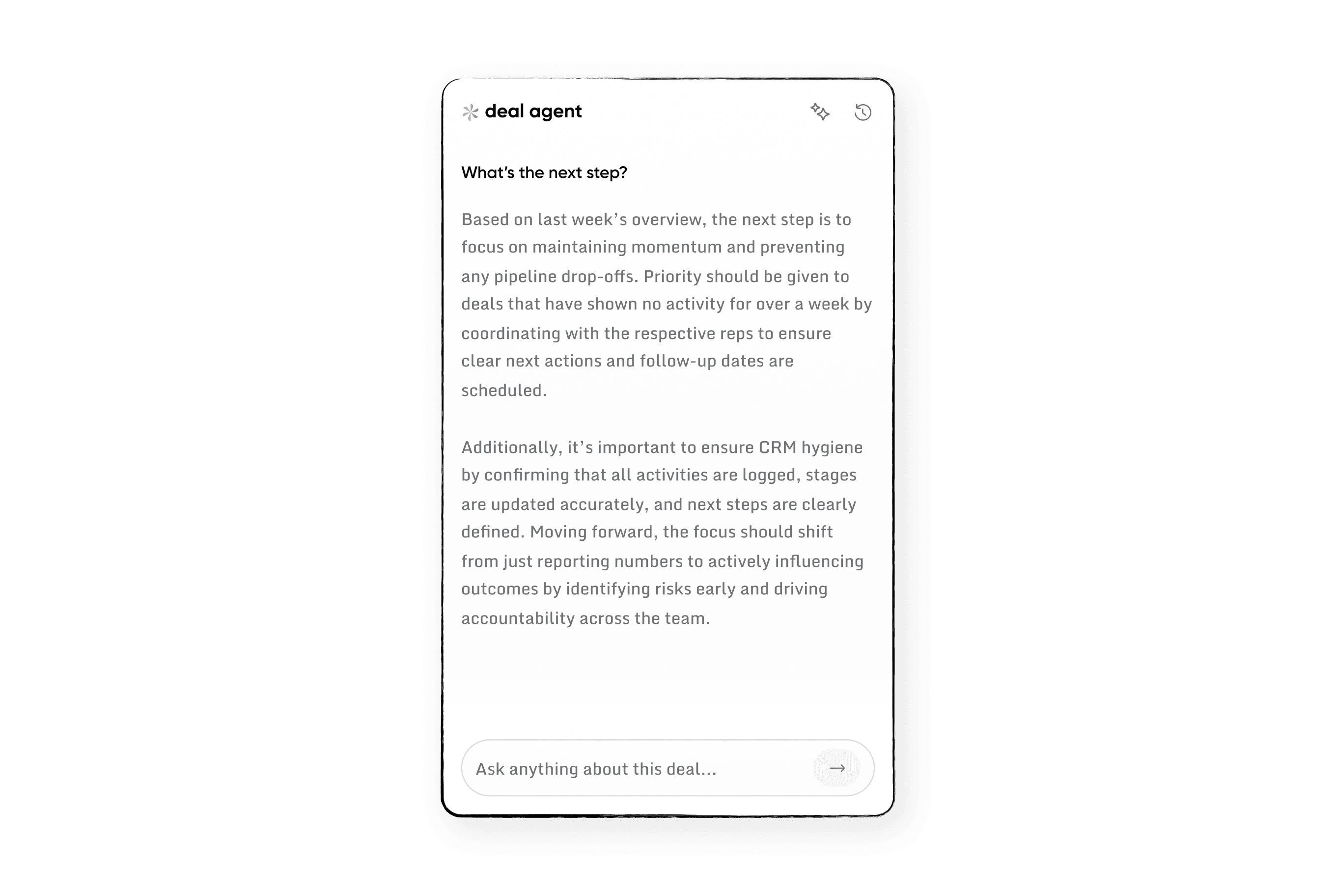
How to coach a team on objection handling
Memorizing ten replies will not prepare a rep for a buyer who responds differently. Practice the turn after the first answer: the competitor offers a deeper discount, finance challenges your ROI assumptions, or security rejects the documentation.
Have reps roleplay sales conversations with a colleague or an AI buyer. Use a simple scorecard to judge observable behavior:
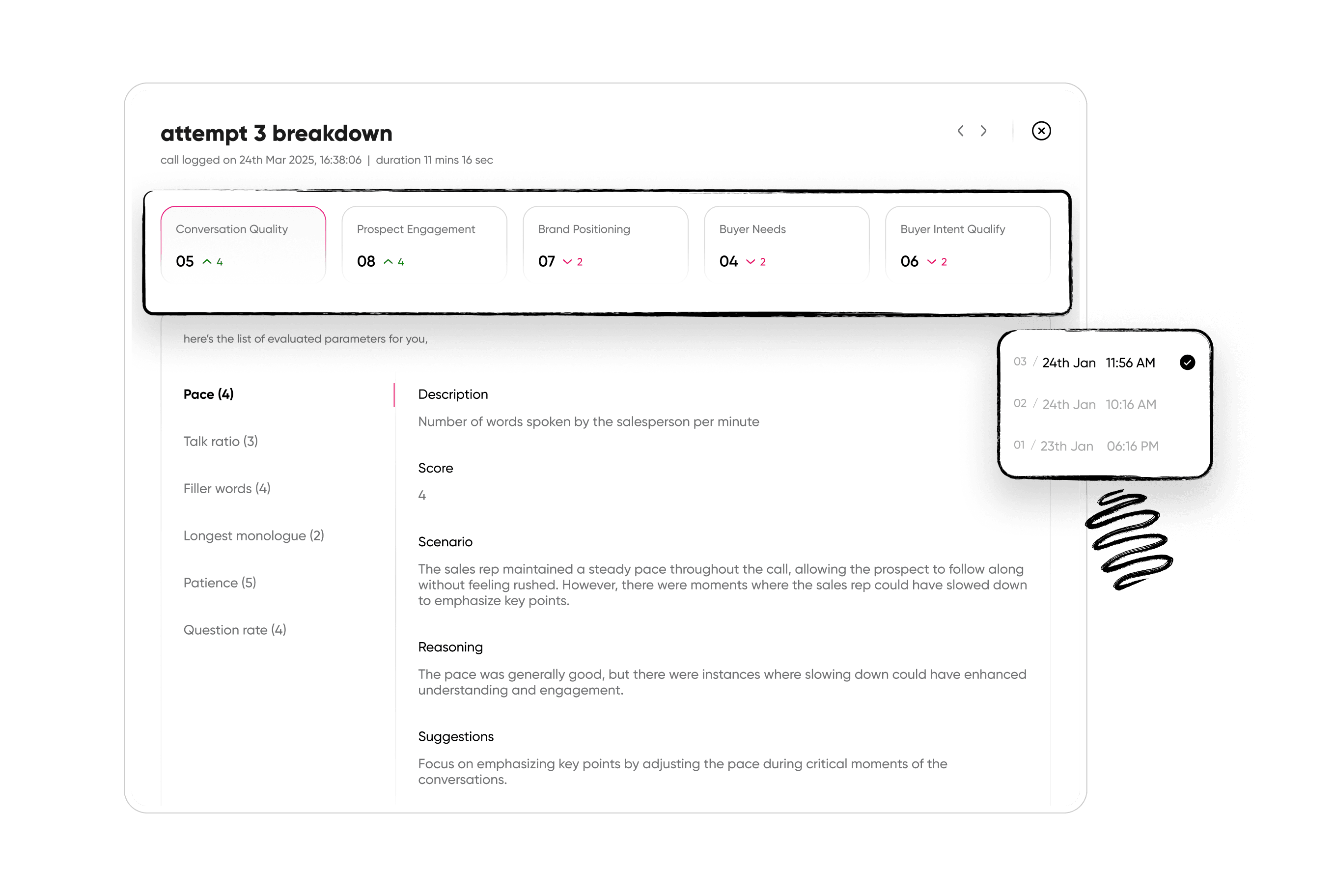
- Diagnosis: Did the rep establish what the buyer meant, without guessing?
- Judgment: Did they distinguish a concern from a hard constraint or poor fit?
- Evidence: Did they use accurate proof that addressed the concern?
- Next step: Did they identify an actual decision or requirement, not just secure another meeting?
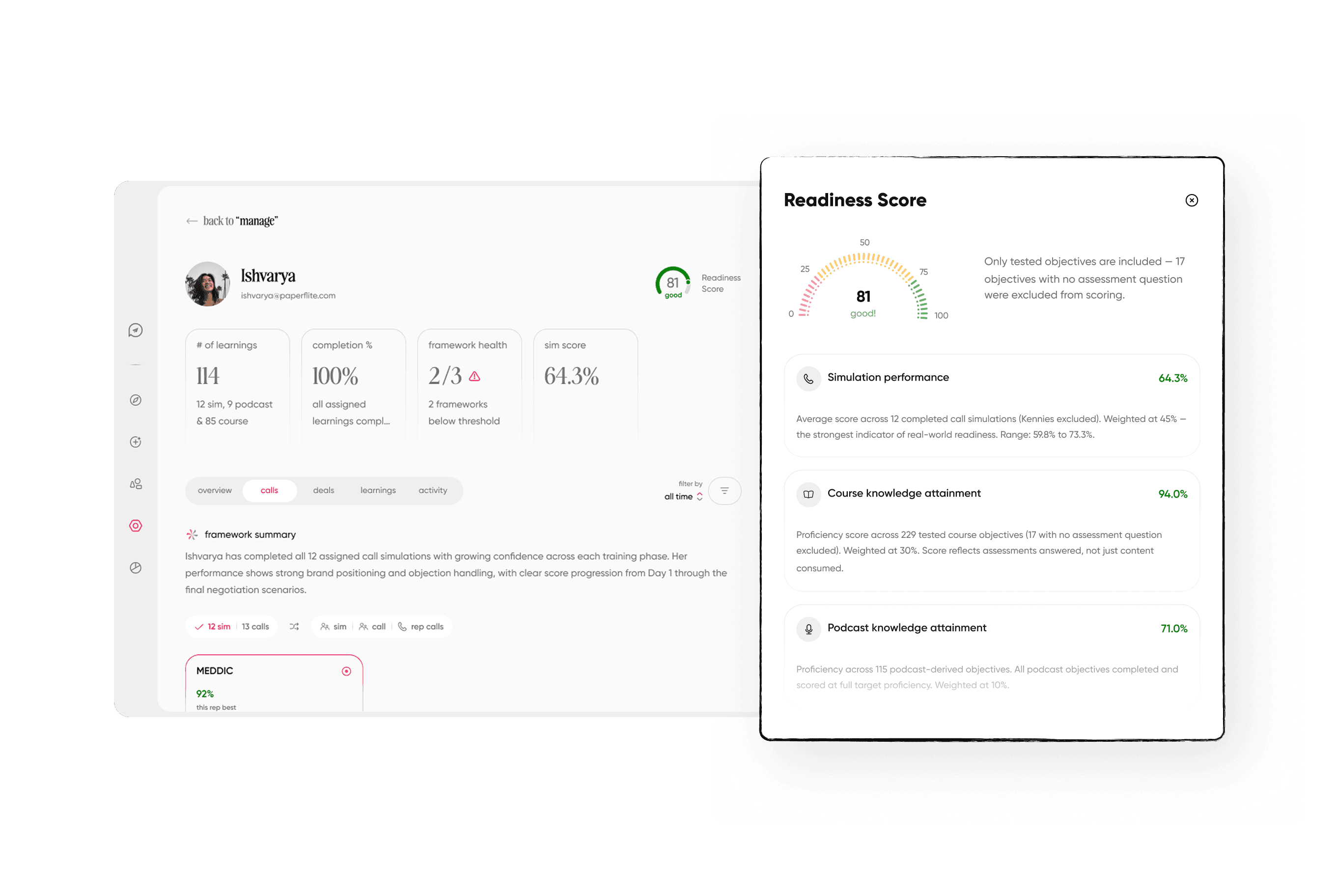
For example, a rep who explains pricing well but consistently misses implementation concerns needs a different practice scenario from one who struggles to ask clarifying questions. Score the behavior, give specific feedback and replay the hard moment.
Where pf1.ai’s Coaching and Knowledge agents fit
A rep can know the right response in practice and still struggle to find the right evidence in a live deal. That is where two parts of pf1.ai (from the house of Paperflite) connect.
Suppose a prospect says, “We tried a similar platform and adoption failed.” The rep needs to explore why, practise a realistic conversation and locate approved information about onboarding and rollout. The Coaching agent supports objection-handling roleplays and readiness feedback, helping teams practise the awkward follow-up questions rather than memorize a perfect first line.
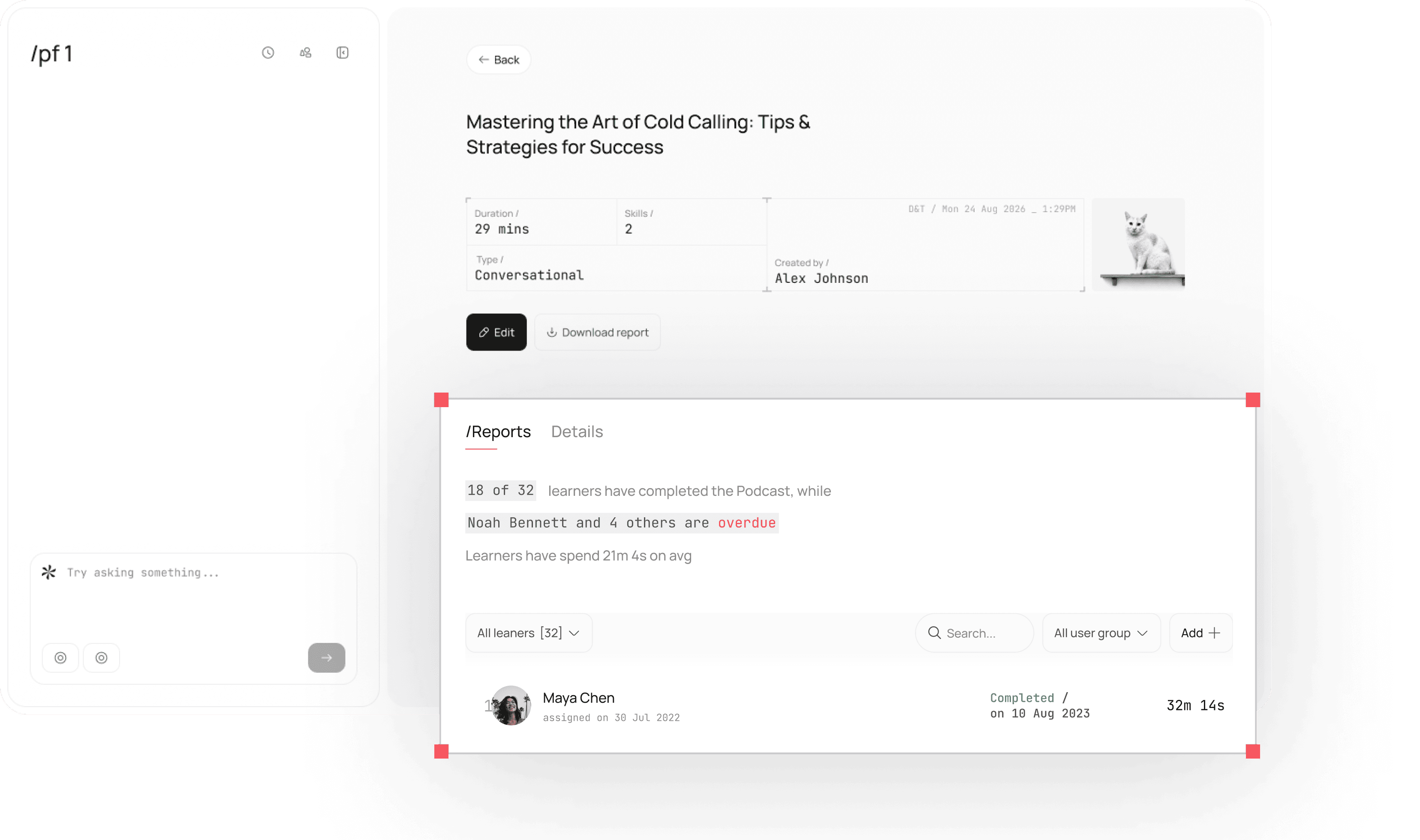
The Knowledge agent helps teams find relevant answers grounded in company knowledge, with supporting sources. That matters when the buyer asks for a policy, approved claim or product detail that the rep should not improvise.
Together, these capabilities address two separate problems: being ready for the conversation and having trustworthy material when it happens. They do not replace a rep’s judgment, fix a product limitation or turn an unqualified deal into a qualified one.
If your team wants to make objection practice and approved knowledge easier to use, see how pf1.ai works.
Put this into practice this week
Pull three objections from active deals. For each one, record what the buyer actually said, what the objection might mean, one question that would distinguish the possibilities, and the evidence you can genuinely provide. Practise the first response and the next pushback. Then review whether the conversation resolved a decision barrier, exposed a real constraint or showed that the deal was not a fit.
That is the difference between having an objection-handling script and being able to handle objections.
Frequently asked questions
What are the five steps of sales objection handling?
Listen to the full concern, clarify what the buyer means, acknowledge the trade-off, respond with relevant evidence, and confirm the remaining decision or next step. Use judgment rather than applying a rigid script.
How do you respond when a buyer says your price is too high?
Find out whether the comparison is against a hard budget, another offer or the perceived value. Compare like-for-like scope and use the buyer’s own assumptions for any financial case. Do not discount automatically.
What if the buyer’s objection is valid?
Acknowledge it. If your product cannot meet a mandatory requirement or the economics do not work, be transparent and consider disqualifying the opportunity rather than inventing a workaround.
How do you handle objections from multiple stakeholders?
Identify the approval owners and their requirements. Finance may need a credible business case, IT may require documentation, and end users may need an adoption plan. Help your champion share an accurate summary with each group.
How can sales managers improve objection handling?
Use real objections in roleplays, score diagnosis and evidence quality, then practise the buyer’s second pushback. Review actual deal outcomes to identify recurring skill gaps and missing proof.
Paperflite's Content Technologyin Action
It's Easier Than Falling Off a Log
(Don't Ask Us How We Know That)

