
Best Mutiny Alternatives & Competitors (2026)
Nov 18, 2026
The short answer
The best Mutiny alternatives in 2026 are pf1 when AI should generate pages, deal rooms and rep assets from approved content and what has actually won deals, and Userled or Tofu for AI-generated ABM campaigns. Folloze suits ABM microsites, while Abmatic AI or Webflow Optimize replace Mutiny's retired website personalization.
Disclosure: pf1 (from the house of Paperflite) publishes this guide, and our Experience agent is one of the tools listed. We put ourselves first because it's our blog; every tool, including ours, is judged on the same criteria.
Key facts (Nov 2026)
- Product: Mutiny retired its website personalization software and relaunched on 8 April 2026 as an AI agent that writes customer-facing sales assets.
- Pricing: a free plan for up to 5 people, Business at $50 a seat a month with 50 credits each, and Enterprise from $40,000 a year, per Mutiny's pricing page.
- Reviews: no independently verified reviews of the relaunched product had appeared on G2, Capterra or Gartner Peer Insights by Q3 2026, per AI Agent Index.
Pricing as of 18 Nov 2026
| Tool | Best for | Pricing | Who runs it day to day |
|---|---|---|---|
| Mutiny | Reps and marketers who want an AI agent to draft deal rooms, decks, business cases, ABM pages and follow-ups from a prompt | Free for up to 5 people; Business $50 a seat a month; Enterprise from $40,000 a year | Account executives and marketers |
| pf1 (from the house of Paperflite) | Sales and marketing teams that want AI to generate pages, deal rooms and rep assets from approved knowledge and past wins, with buyer signals, deal scores and coaching on one platform | Free migration from Mutiny. Custom pricing; contact pf1 for a quote | Marketers and customer-facing teams |
| Userled | ABM teams that want AI-generated microsites, sales pages and LinkedIn ads for every target account | Custom; sales-led | ABM, demand gen and field marketing |
| Tofu | Marketing teams that want one brief turned into personalized emails, landing pages and ads | Custom; quote-based | Demand gen and content marketing |
| Folloze | Marketing teams that want no-code ABM microsites, event pages and sales rooms | Custom; Vendr reports a $56,794 median a year | Marketers and field marketing |
| Abmatic AI | Former Mutiny customers who want account-level website personalization back, with intent and ads | Freemium free; Advanced $3,000 a month; Premium $4,000 a month, billed annually | Marketing and RevOps teams |
| Webflow Optimize | Teams on Webflow that want AI testing and personalization on their own site | From $299 a month, billed yearly, on top of a Webflow site plan | Web and growth marketers |
What happened to Mutiny's website personalization?
Most "Mutiny alternatives" lists still describe a website personalization tool. That product is gone.
- 8 April 2026: Mutiny relaunched as an AI agent for creating customer-facing assets, after discontinuing its website personalization and A/B testing software, per AI Agent Index.
- What it is now: Mutiny calls itself "the sales assistant built for customer-facing work," per its own site. It handles meeting prep, call notes, follow-ups, CRM updates and deal assets.
- What that means for you: if you bought Mutiny to personalize your website, you need a different kind of tool. If you're weighing the new agent, you're comparing AI sales assistants and asset builders.
What Mutiny does well
The new Mutiny is a capable agent for reps and marketers who need polished assets fast.
- Many asset types from one prompt. Deal rooms with next steps per stakeholder, pricing proposals, business cases, pitch decks, meeting recaps, case studies and ABM microsites, per Mutiny's site (Nov 2026).
- Brand grounding. It pulls colors, fonts and logo from your website, and its Brain stores your sales process, playbooks, pricing and each rep's writing style.
- It works where reps already are. Routines run meeting prep, post-call follow-ups and check-ins on quiet accounts. An MCP server on every plan connects it to Claude and ChatGPT.
- Easy to try. The free plan covers up to 5 people, and Business costs $50 a seat a month.
- Recognizable customers. Snowflake, Uber, Rippling, GitLab and Figma are named on Mutiny's site.
Why are teams looking for Mutiny alternatives in 2026?
These come from independent coverage, Mutiny's own published pricing and product pages, and team intel we checked against public sources.
- The product they bought no longer exists. Teams that used Mutiny to personalize their website have to replace that capability elsewhere.
- Credits shape the bill. A credit is one interaction with the agent. Business includes 50 a seat each month, so heavy users hit the cap or move up a plan.
- The jump to Enterprise is steep. Salesforce integration and SSO sit on Enterprise, which starts at $40,000 a year. Teams that outgrow $50 a seat face a big step.
- Control sits with the rep. Assets come from a prompt and the Brain, and Mutiny describes no approval step before they reach a buyer. Marketing teams that need sign-off look for tighter control.
- Proof is still forming. Independent reviews of the relaunched product were scarce through Q3 2026, so buyers lean on references and pilots.
Are you replacing website personalization or an AI sales agent?
Mutiny buyers now fall into two groups. Name yours before you shortlist.
- You came for website personalization. Look at Abmatic AI for account-level personalization with intent and ads, or Webflow Optimize if your site runs on Webflow.
- You want AI-built ABM campaigns. Userled builds microsites, sales pages and LinkedIn ads per account. Tofu turns one brief into emails, landing pages and ads.
- You want ABM microsites and sales rooms without code. Folloze is built for that.
- You want the agent, but grounded and measured. pf1 takes a different approach. Pages, deal rooms and rep assets are generated from approved content and past wins, buyers' reading flows into deal scores, and reps practice on the same material.
How we evaluated
We judged every tool, including ours, on six questions sales, ABM and RevOps leaders ask when they reconsider Mutiny:
- Creation: which assets the AI builds, and how close the first draft is to sendable.
- Grounding and control: whether output comes from approved content, with approvals before it reaches a buyer.
- Buyer signal: what you learn about who read what, and whether it reaches the rep.
- Deal and rep impact: whether that signal feeds deal decisions and coaching.
- Total cost: plans, credits, minimums and setup effort.
- Fit with your stack: CRM, ad platforms, your website and AI assistants.
What we checked. We read each vendor's product pages, docs, pricing pages and release notes, plus G2, Capterra, Vendr and dated coverage, in November 2026. Our team has used several of these tools firsthand and has sat in on many of these vendors' sales calls, so we know how they sell, price and plan their roadmaps.
The 6 best Mutiny alternatives
1. pf1 (from the house of Paperflite): for grounded pages and deal rooms that feed deal decisions
What it is. pf1 is an agentic growth team for sales and marketing: AI agents that work from your approved company knowledge and learn from what buyers do. The same content engages the account, tells sales who's ready and helps the rep close. Teams at ServiceNow, e2open, HP, CBRE and Wiley use it, per pf1.ai.
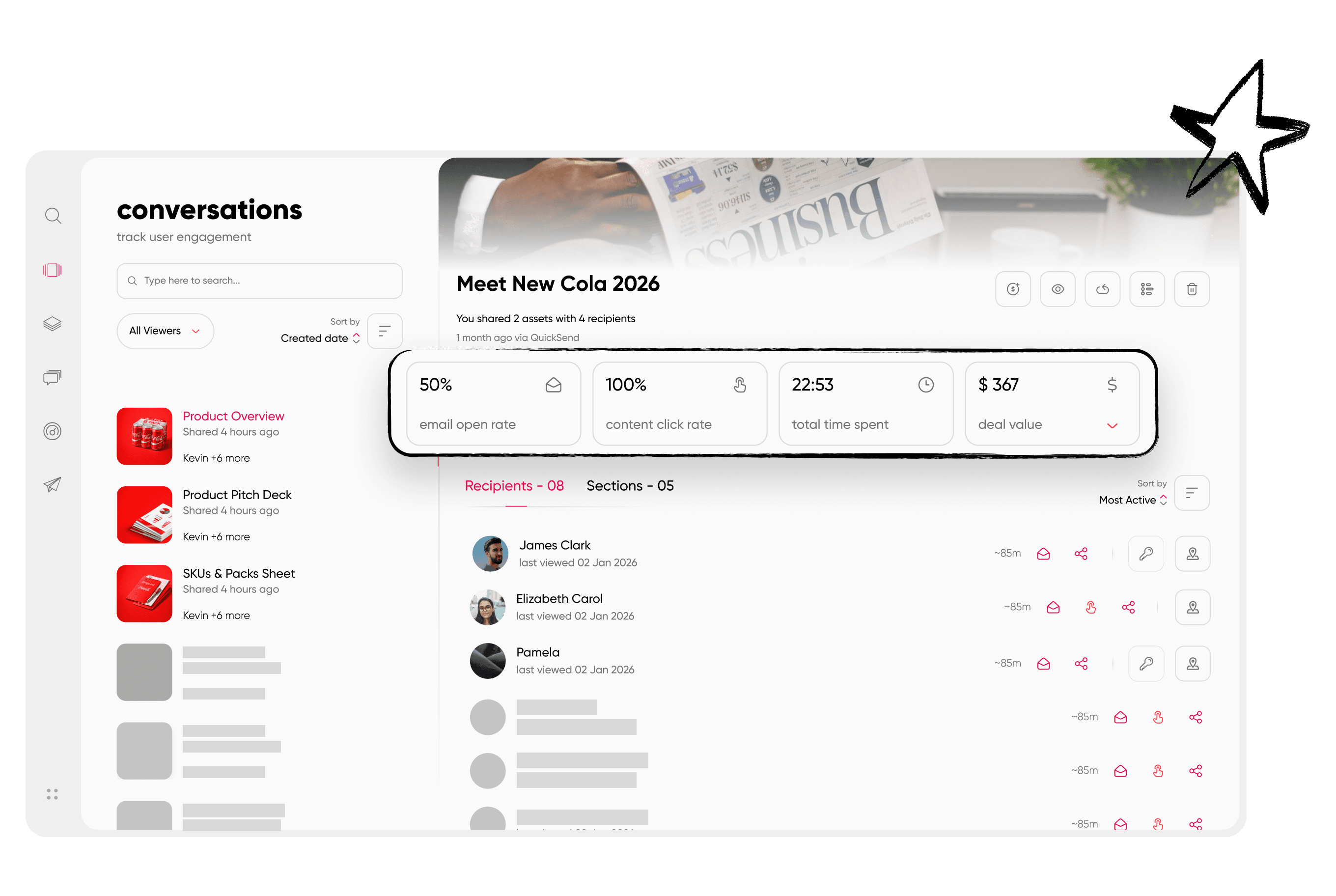
Where a Mutiny buyer starts: Experience builds personalized pages, interactive e-books and hubs from a prompt, on approved content. Distribution shares them as buyer hubs and deal rooms and tracks every view, section and forward. Deal turns that reading into deal scores. pf1 also generates new assets for reps, drawing on which content and use cases have won deals, so one rep's win becomes a pattern the whole team repeats.
Who runs it day to day: marketers, ABM and customer-facing teams, without a developer queue. Approval gates, audit trails, SSO and SOC 2 Type 2 audits sit behind it.
In practice: Freshworks cut its cost per lead by 70% and lifted returning visitors by 26% with a campaign hub, per pf1.ai's Freshworks story. Grammarly hit a 30% conversion rate with an interactive report, per its Grammarly story. Both were built on Cleverstory, Paperflite's interactive content product, which now runs inside pf1 as the Experience agent and the Lead agent.
What it does that Mutiny doesn't:
- Generates new assets for reps from what has actually worked: content performance, winning use cases and deal outcomes, not just a prompt.
- Routes content through approval gates before it reaches a buyer, so every page and deal room uses approved claims.
- Gates content when intent is high, asking only for the fields the moment needs, through the Lead agent. More on smart gating.
- Builds interactive e-books and product tours, not just pages and decks, through the Experience agent.
- Scores deal health against your own won and lost deals, using what buyers opened alongside CRM activity, through the Deal agent.
- Turns the same content into AI roleplays built from your own deals, so reps practice before they send, through the Coaching agent.
- Sends account audiences to LinkedIn and other ad platforms through integrations.
Watch-outs: It's built for teams, not individuals, so it shines in a team rollout rather than one rep's free trial. It works from content you've approved, so the first step is connecting your library and CRM rather than prompting from a blank page. It's strongest when your content and deal data are connected to pf1.
Pricing: Free migration from Mutiny. Custom pricing; contact pf1 for a quote.
Best for: Sales and marketing teams that want AI to generate pages, deal rooms and rep assets from approved knowledge and past wins, with buyer signals, deal scores and coaching on one platform.
2. Userled: for AI-generated ABM campaigns across every account
What it is. An AI ABM activation platform. It takes a target account list and builds personalized microsites, sales pages, LinkedIn ads and event invites for each account and buying-committee member.
Who runs it day to day: ABM, demand gen and field marketing teams, with sales using the pages.
What it does that Mutiny doesn't:
- Runs LinkedIn ABM ad campaigns alongside the account pages it generates.
- Personalizes your own website for visiting accounts, through its inbound web personalization product.
Watch-outs: Pricing is sales-led with no published tiers. A few G2 reviewers mention a learning curve and limits for small teams.
Pricing: Custom. It holds 4.7/5 on G2 from 39 reviews (June 2026).
Best for: ABM teams that want AI-generated microsites, sales pages and LinkedIn ads for every target account.
3. Tofu: for turning one brief into a multichannel campaign
What it is. An AI-native B2B marketing platform. It turns a single campaign brief into personalized emails, landing pages, ads and sales collateral for each target account, and its ads agent can launch paid campaigns end to end.
Who runs it day to day: demand gen and content marketing teams.
What it does that Mutiny doesn't:
- Launches and runs paid ad campaigns with an AI ads agent, generating many creative variations.
Watch-outs: It's a marketing tool rather than a seller's assistant, so deal rooms and call follow-ups sit elsewhere. Pricing is quote-based.
Pricing: Custom. It holds 4.5/5 on G2 from 15 reviews (July 2026).
Best for: Marketing teams that want one brief turned into personalized emails, landing pages and ads.
4. Folloze: for no-code ABM microsites and sales rooms
What it is. A buyer experience platform where marketers build no-code boards for ABM microsites, digital sales rooms and event pages. Folloze X adds AI agents, and an MCP server lets teams create boards from Claude or ChatGPT.
Who runs it day to day: marketers and field marketing teams.
What it does that Mutiny doesn't:
- Hosts content in boards that mix gated and ungated assets, with engagement tracked per asset and per lead.
- Builds event registration hubs on the same platform as account pages and sales rooms.
Watch-outs: It's an experience layer, so account identification and intent come from partners like 6sense or Demandbase. There's no published pricing.
Pricing: Custom. Vendr reports a $56,794 median a year, from $34,977 to $108,153. It holds 4.8/5 on G2 from 49 reviews.
Best for: Marketing teams that want no-code ABM microsites, event pages and sales rooms.
5. Abmatic AI: for getting account-level website personalization back
What it is. An AI-native ABM platform covering company reveals, account-level website personalization, ads across LinkedIn, Google and Meta, intent signals and on-site chat, per Abmatic's website (Nov 2026).
Who runs it day to day: marketing and RevOps teams.
What it does that Mutiny doesn't:
- Personalizes your own website for each visiting account, the job Mutiny's retired product used to do.
- Identifies the companies visiting your site and adds third-party intent signals.
- Runs account-based ads across LinkedIn, Google and Meta.
Watch-outs: Independent proof is thin, with 2 reviews on G2 (Nov 2026). The first paid plan is a $36,000 yearly commitment, and Abmatic notes that low-traffic sites get limited identification data.
Pricing: Freemium free; Advanced $3,000 a month and Premium $4,000 a month, billed annually, per Abmatic's pricing page.
Best for: Former Mutiny customers who want account-level website personalization back, with intent and ads.
6. Webflow Optimize: for AI personalization on a Webflow site
What it is. Webflow's AI testing and personalization add-on, built on technology from Intellimize, which Webflow acquired in April 2024, per UsagePricing. It runs A/B tests, AI-optimized tests and audience-based personalization on your own pages.
Who runs it day to day: web and growth marketers.
What it does that Mutiny doesn't:
- Personalizes and tests your live website pages, with AI choosing the best variation for each visitor.
Watch-outs: It's built for sites that run on Webflow. It's priced by page views, and the entry tier covers 25,000 a month.
Pricing: From $299 a month billed yearly, on top of a Webflow site plan, per UsagePricing.
Best for: Teams on Webflow that want AI testing and personalization on their own site.
How Mutiny and the alternatives compare
Pricing at a glance
Mutiny publishes list prices, while most alternatives quote, so we show list prices or what buyers report paying where it's available. As of 18 Nov 2026.
| Tool | Reported median a year | Reported range a year | Source |
|---|---|---|---|
| Mutiny | Business $600 a seat (list); Enterprise from $40,000 | – | Mutiny |
| pf1 | Free migration from Mutiny. Custom pricing; contact pf1 for a quote | – | pf1 |
| Userled | Custom | – | Userled |
| Tofu | Custom | – | Tofu |
| Folloze | $56,794 | $34,977 to $108,153 | Vendr |
| Abmatic AI | Advanced $36,000; Premium $48,000 (list) | – | Abmatic AI |
| Webflow Optimize | From $3,588 (list), plus a Webflow site plan | – | UsagePricing |
What Mutiny and the alternatives share
| Capability | Mutiny | pf1 | Userled | Tofu | Folloze | Abmatic AI | Webflow Optimize |
|---|---|---|---|---|---|---|---|
| AI-generated 1:1 ABM pages and microsites | ✓ | ✓ | ✓ | ✓ | ✓ | ✓ | – |
| Digital sales rooms | ✓ | ✓ | ✓ | – | ✓ | – | – |
| Meeting prep briefs for reps | ✓ | ✓ | – | – | – | – | – |
| Coaching from recorded calls | ✓ | ✓ | – | – | – | – | – |
| CRM integration | ✓ | ✓ | ✓ | ✓ | ✓ | ✓ | ✓ |
| MCP server for AI agents | ✓ | ✓ | – | – | ✓ | ✓ | ✓ |
Where alternatives go further than Mutiny
These rows cover what happens around the asset: what it's built from, how it captures the buyer, and how that signal reaches deals and reps. Tools with no confirmed capability beyond Mutiny here are left out of this table; their strengths are in their own sections above.
| Capability | Mutiny | pf1 | Userled | Tofu | Abmatic AI |
|---|---|---|---|---|---|
| New rep assets generated from what has won: content performance and winning use cases | – | ✓ | – | – | – |
| Approval gates before content reaches a buyer | – | ✓ | – | – | – |
| Content gated by intent, asking only the fields the moment needs | – | ✓ | – | – | – |
| Interactive e-books and product tours | – | ✓ | – | – | – |
| Deal health scored against your own won and lost deals | – | ✓ | – | – | – |
| AI roleplays built from your own deals | – | ✓ | – | – | – |
| Account-based ad audiences | – | ✓ | ✓ | ✓ | ✓ |
Verified as of 18 Nov 2026 against every available source: vendor product pages, help docs and release notes, review sites, independent coverage, our competitive intel and our team's hands-on experience with these tools. A tick means the capability is offered; a dash means it isn't publicly documented.
How do you choose the right Mutiny alternative?
Start from the job you hired Mutiny for, not the feature list. For the wider category, see our guide to the best deal rooms for account-based selling.
| If your problem with Mutiny is… | Pick |
|---|---|
| You relied on its website personalization, which is gone | Abmatic AI, or Webflow Optimize on a Webflow site |
| You want AI to generate pages, deal rooms and rep assets from approved content and past wins, with reading data feeding deal decisions | pf1 |
| You want AI-built microsites and LinkedIn ads for every target account | Userled |
| You want one brief turned into emails, landing pages and ads | Tofu |
| You want no-code ABM microsites, event pages and sales rooms | Folloze or pf1 |
| The $40,000 Enterprise floor is out of reach, but you need CRM sync and SSO | Ask pf1, Userled and Folloze for quotes sized to your team |
Questions to ask every vendor before you sign
Demos show the best case. These three questions show what the next year looks like.
What will a year cost at our seats and usage?
Ask: "Quote us at our seats, assets per month and integrations, including credits, overages and the renewal cap."
A good answer: a written number with usage and overages included, not a starting price.
Where does the AI get its facts?
Ask: "Generate an asset for one of our live deals, then show us where each claim came from and who approved it."
A good answer: every claim traces back to approved content, with an approval step before anything reaches a buyer.
What happens after the buyer opens it?
Ask: "Share a page with us in the demo, then show what the rep sees: who read what, for how long, and what happens to the deal."
A good answer: reading data reaches the rep the same day and changes the deal's next step, not just a view count.
How long does it take to move off Mutiny?
Most teams plan the switch around their renewal date, especially on an annual Enterprise contract. Five things set the timeline:
- Live assets: deal rooms, ABM pages and decks already shared with buyers need moving or replacing before links expire.
- Brain and templates: playbooks, pricing, writing profiles and asset templates need rebuilding in the new tool.
- Routines: meeting prep, follow-up and quiet-account automations have to be recreated.
- Integrations: CRM, Slack, Outreach or Salesloft and any AI assistant connections need reconnecting.
- Website personalization: if you still relied on the retired product, budget for a separate rollout.
Moving to pf1 is a different job. You bring the approved content you want buyers to see, and pf1's agents generate pages, deal rooms, rep assets and coaching from it, and learn which pieces win. Moving from Mutiny to pf1 is free.
The bottom line
If you came to Mutiny for website personalization, that product is gone: Abmatic AI or Webflow Optimize fill the gap. If you want AI-built ABM campaigns, Userled and Tofu are strong picks, and Folloze suits no-code microsites. If you want the agent's speed, grounded in approved content and what has won, pf1 is built for that. It turns what wins into a motion every rep can repeat.
FAQ
What is the best Mutiny alternative?
It depends on the job. Abmatic AI or Webflow Optimize replace Mutiny's retired website personalization. Userled and Tofu suit AI-generated ABM campaigns, and Folloze suits no-code microsites. pf1 suits teams that want pages, deal rooms and rep assets generated from approved content and past wins, with reading data feeding deal scores and coaching.
Does Mutiny still do website personalization?
No. Mutiny discontinued its website personalization and A/B testing software and relaunched on 8 April 2026 as an AI agent for customer-facing sales assets. Teams that need website personalization now look at tools like Abmatic AI, Userled or Webflow Optimize.
How much does Mutiny cost?
Mutiny has a free plan for up to 5 people, a Business plan at $50 a seat a month with 50 credits each, and Enterprise from $40,000 a year, per its pricing page (Nov 2026). A credit is one interaction with the agent. Salesforce integration and SSO sit on Enterprise.
Is there a free Mutiny alternative?
Abmatic AI has a free Freemium plan for website personalization and intent. Mutiny's own free plan covers up to 5 people with 30 credits each a month. Most tools that build ABM pages and deal rooms, including Userled, Tofu and Folloze, are quote-based.
Is Mutiny worth it for small teams?
For small-scale teams, the free plan and $50 Business seat make Mutiny easy to try for drafting assets. The step up comes when you need Salesforce sync or SSO, which start at $40,000 a year. Teams that want approved content and deal insight from day one can ask pf1 for a quote sized to their team.
What's the difference between Mutiny and pf1?
Both use AI agents that generate assets for reps: Mutiny from a prompt and its Brain, pf1 generates from approved company knowledge and from what has won: content performance, winning use cases and deal outcomes. It measures what buyers read and turns what wins into a repeatable motion. Moving from Mutiny to pf1 is free.
Mutiny vs Userled: which is better?
They suit different teams. Mutiny is an assistant for reps, drafting deal rooms, decks and follow-ups. Userled is built for ABM marketers, generating microsites, sales pages and LinkedIn ads for every target account, and it also personalizes your website.
What are the main Mutiny competitors in 2026?
For the new AI agent: Userled, Tofu, Folloze and pf1. For the retired website personalization: Abmatic AI, Webflow Optimize and Userled's inbound web personalization.
Sources
- AI Agent Index: Mutiny profile (July 2026)
- UsagePricing: Webflow pricing blueprint (2026)
- Vendr: Folloze pricing (Nov 2026)
- G2: Userled, Tofu, Folloze and Abmatic AI reviews (Nov 2026)
- pf1 Experience agent and pf1 Deal agent
Paperflite's Content Technologyin Action
It's Easier Than Falling Off a Log
(Don't Ask Us How We Know That)

