
Best PathFactory Alternatives (2026): Pricing, Reviews & How pf1 Compares
Nov 18, 2026
The short answer
The best PathFactory alternatives in 2026 are pf1 for content journeys that carry into the deal, Folloze for ABM pages and Hushly for lead conversion. Qualified suits Salesforce teams that want an AI SDR, Trendemon suits journeys on your existing site, and Foleon suits designed interactive documents.
Disclosure: pf1 (from the house of Paperflite) publishes this guide, and our Lead agent is one of the tools listed. We put ourselves first because it's our blog; every tool, including ours, is judged on the same criteria.
Key facts (Nov 2026)
- Ownership: Kaltura, the video and events software company, closed its acquisition of PathFactory on 1 April 2026 for $22 million in cash, per its SEC filing.
- Pricing: PathFactory doesn't publish prices. Vendr reports a $49,900 median a year across 43 purchases, priced by monthly active visitors with 12-month minimum terms.
- Reviews: 4.4/5 on G2 from 202 reviews. Reviewers praise content delivery and support, and flag integrations, reporting and a steep learning curve.
Pricing as of 18 Nov 2026
| Tool | Best for | Pricing |
|---|---|---|
| PathFactory | Enterprises running content journeys and conversational experiences on their website | Not published; Vendr reports a $49,900 median a year |
| pf1 (from the house of Paperflite) | Teams that want content journeys, interactive assets and buyer pages that carry into the deal, with deal rooms, rep content and deal insight from one approved source | Free migration from PathFactory. Custom pricing; contact pf1 for a quote |
| Folloze | ABM teams that want AI agents to build personalized account pages | Not published |
| Hushly | Demand-gen teams focused on turning content traffic into leads | Not published |
| Qualified | Salesforce teams that want an AI SDR to qualify visitors and book meetings | Not published |
| Trendemon | Teams that want journeys and personalization on their existing website | From $699 a month for 25,000 pageviews, list |
| Foleon | Teams producing designed interactive documents and microsites | Quote only |
What PathFactory does well
PathFactory helped define the content experience category, and its strengths are real.
- Content journeys at enterprise scale. Content Tracks string assets into personalized, binge-style journeys. Its content intelligence shows which assets move accounts forward.
- Conversations on your content. ChatFactory turns static pages into guided conversations. It was named a Leader in The Forrester Wave: Conversation Automation Solutions for B2B, Q4 2025, with top scores in 11 criteria.
- Reviewers rate the service. G2 reviewers most often praise high-quality content delivery and excellent customer support.
- Real enterprise use. LG is among its published case studies, and Kaltura's filings describe it as adding content intelligence and journey orchestration to Kaltura's platform.
By the numbers: 4.4/5 on G2 from 202 reviews · Forrester Wave Leader, Q4 2025 · $49,900 reported median a year · about two months to implement, per G2 reviewers
What changed at PathFactory in 2026?
Two owners in under two years changed what PathFactory customers are renewing into.
- July 2024: PathFactory acquires Uberflip and later moves Uberflip customers toward its own platform, per CMSWire.
- 15 March 2026: Kaltura signs a definitive agreement to buy PathFactory for about $22 million in cash.
- 1 April 2026: The acquisition closes.
- 17 April 2026: Kaltura debuts its "Agentic Revenue Engagement" platform at Adobe Summit, built on PathFactory's content intelligence and Kaltura's AI avatars.
- 21 April 2026: A limited beta combines ChatFactory with Kaltura's Agentic Avatars for face-to-face, avatar-led conversations.
PathFactory still sells and supports its platform under its own name. What has changed is who sets the roadmap: content journeys now sit inside a video, events and avatar platform.
Why are teams looking for PathFactory alternatives in 2026?
These come from PathFactory's own G2 reviewers, independent pricing data and analyst coverage, not from competitors' marketing.
- Integrations take work. G2 reviewers report integration issues, especially with HubSpot, and about two months to implement.
- Reporting and speed. Poor reporting, slow loading and an outdated interface are recurring G2 themes.
- A steep learning curve. Reviewers say new admins need time, and journeys depend on well-tagged content.
- Price grows with traffic. Vendr reports quotes built on monthly active visitors, 12-month minimums and renewal increases typically between 3% and 7%.
- Conversations in English only. Forrester's Wave describes ChatFactory as a fit for teams personalizing conversations exclusively in English.
- A video-first owner. Teams whose main job is content journeys want to know that job stays central as Kaltura builds around avatars and video.
The bigger reason is reach. A PathFactory journey usually ends at the form. Teams now want the same content to follow the account into the deal.
Which PathFactory job are you replacing?
PathFactory does two jobs, and most teams lean on one. Name yours before you shortlist.
- Content journeys and hubs: you need content sequenced and recommended across your site. Look at Hushly, Folloze or Trendemon.
- Buyer conversations: you need visitors' questions answered and qualified. Look at Qualified, or Foleon for answers inside a document.
- The whole path to close: you want journeys, interactive assets, deal rooms and deal insight on one approved source. pf1 takes that different approach.
How we evaluated
We judged every tool, including ours, on seven questions marketing and revenue leaders ask when they reconsider PathFactory:
- Journey building: how well it sequences and recommends content, and how much tagging that takes.
- Buyer conversations: whether buyers get accurate answers from your content, and what happens when the AI doesn't know.
- Personalization and conversion: account and visitor personalization, gating, forms and routing to sales.
- Content creation: whether it builds pages, documents and decks, or only arranges what you have.
- Reach beyond marketing: deal rooms, rep content, coaching and distribution through employees.
- Integration effort: native connections to Marketo, HubSpot and Salesforce, and time to launch.
- Pricing and ownership: published plans or independent contract data, and whether the owner shares your priorities.
What we checked. We read each vendor's product pages, pricing pages and release notes, plus G2, Vendr, SEC filings and dated coverage, in November 2026. Our team has used several of these tools firsthand and has sat in on many of these vendors' sales calls, so we know how they sell, price and plan their roadmaps.
The 6 best PathFactory alternatives
1. pf1 (from the house of Paperflite): for content journeys that carry into the deal
What it is. pf1 is an agentic growth team for sales and marketing: AI agents that work from your approved company knowledge and learn from what buyers do. Content journeys, interactive assets and buyer pages run on the same source as deal rooms and rep content, so marketing's work keeps moving the deal. Teams at ServiceNow, e2open, HP, CBRE and Wiley use it, per pf1.ai.
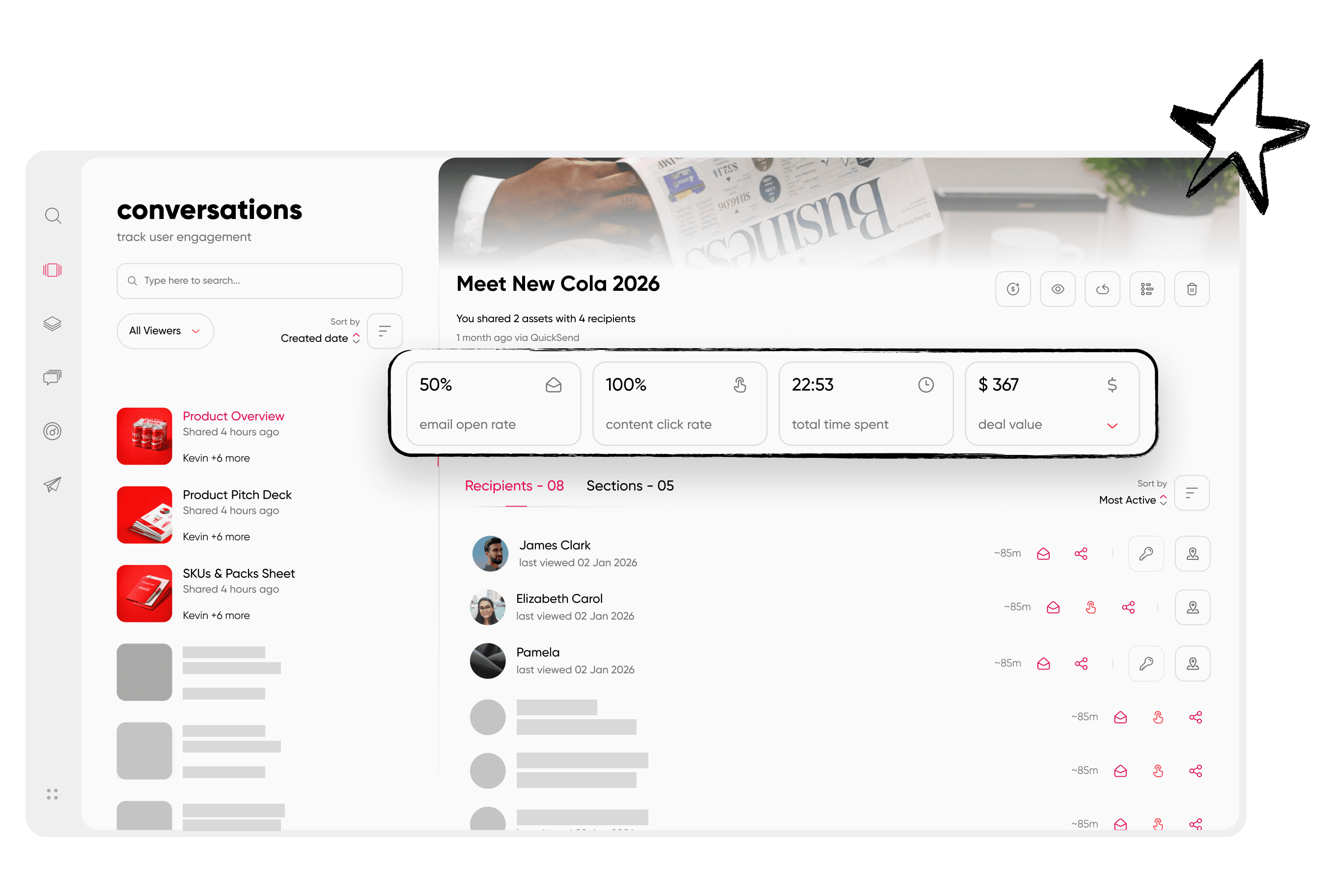
Where a PathFactory buyer starts: Lead identifies the companies visiting your site, personalizes marketing assets and pages for each visitor and gates content by intent. Experience turns approved content into interactive e-books, ABM pages and hubs from a prompt. Distribution shares it all through tracked hubs and deal rooms.
Who runs it day to day: marketing, enablement and customer-facing teams. Approval gates, audit trails, SSO and SOC 2 Type 2 audits sit behind it.
In practice: Freshworks cut its cost per lead by 70% and lifted returning visitors by 26% with a campaign hub, per pf1.ai's Freshworks story. Grammarly hit a 30% conversion rate with an interactive report, per its Grammarly story. Both were built on Cleverstory, Paperflite's interactive content product, which now runs inside pf1 as the Experience agent and the Lead agent.
What it does that PathFactory doesn't:
- Authors interactive e-books, reports and ABM pages natively from your approved content, through the Experience agent, rather than only arranging assets you already have.
- Builds decks, proposals and content for each deal from deal and prospect data, approved content and what has won. One rep's win becomes a pattern the whole team repeats.
- Runs employee advocacy, so reps and experts share approved content on their social channels.
- Puts the approved answer on the rep's screen during live calls, through the Coaching agent.
- Scores deal health against your own won and lost deals, using calls, CRM activity and what buyers read, through the Deal agent.
Watch-outs: It's built for teams, not individuals, so it shines in a team rollout rather than a single marketer's trial. It's strongest when your content and deal data are connected to pf1, so the first step is connecting your library and CRM.
Pricing: Free migration from PathFactory. Custom pricing; contact pf1 for a quote.
Best for: Teams that want content journeys, interactive assets and buyer pages that carry into the deal, with deal rooms, rep content and deal insight from one approved source.
2. Folloze: for ABM pages built by AI agents
What it is. A B2B buyer experience platform for account pages, campaign destinations and sales rooms. It holds 4.8/5 on G2 from 49 reviews.
Who runs it day to day: ABM and campaign marketing teams.
What it does that PathFactory doesn't:
- Deploys pages your team drafts in Claude, ChatGPT or its own agents through an MCP connection, with brand rules applied, per Folloze's blog (Nov 2026).
- Runs three agents in one workspace, for generating campaigns, delivering content to the right buyers and reporting what works, per Folloze's site (Nov 2026).
Watch-outs: G2 reviewers mention design limitations and layout issues, and G2 lists no free trial.
Pricing: Not published.
Best for: ABM teams that want AI to build personalized account experiences at scale.
3. Hushly: for turning content traffic into leads
What it is. A B2B conversion platform for adaptive content hubs, self-nurturing landing pages and ABM microsites. It holds 4.8/5 on G2 from 69 reviews.
Who runs it day to day: demand-gen teams.
What it does that PathFactory doesn't:
- Reaches go-live faster for its reviewers: about one month to implement on G2, against about two for PathFactory.
- Pairs adaptive resource centers with on-page offers built for lead capture, which reviewers credit with steady lead growth.
Watch-outs: G2 reviewers note a learning curve for advanced personalization. It focuses on conversion, not sales-side content.
Pricing: Not published; Hushly quotes its packages through a demo.
Best for: Demand-gen teams whose main metric is leads from content traffic.
4. Qualified (now part of Salesforce): for an AI SDR on your website
What it is. An agentic marketing platform whose AI SDR agent, Piper, qualifies website visitors in conversation and books meetings. Salesforce completed its acquisition of Qualified on 1 April 2026, per Salesforce's newsroom.
Who runs it day to day: demand-gen and sales development teams.
What it does that PathFactory doesn't:
- Books meetings on reps' calendars from website conversations, so the conversation's job is pipeline rather than content discovery.
- Runs inside Salesforce's own product family, alongside its Agentforce agents. Forrester also named it a Leader in the same Q4 2025 Wave as ChatFactory.
Watch-outs: Its roadmap now sits inside Salesforce, so HubSpot-first teams should ask what that means for them. It doesn't build content journeys or documents.
Pricing: Not published.
Best for: Salesforce teams whose real goal for ChatFactory was booking meetings from the website.
5. Trendemon: for journeys on your existing website
What it is. A journey analytics and on-site personalization tool that runs on your current website. It holds 4.6/5 on G2 from 90 reviews.
Who runs it day to day: web and demand-gen teams.
What it does that PathFactory doesn't:
- Publishes its prices, from $699 a month for 25,000 pageviews, and offers a 14-day free trial, per its G2 pricing listing.
- Personalizes content and calls to action on the pages you already have, without moving content into a new hub.
Watch-outs: G2 reviewers mention initial implementation complexity and an interface that can confuse at first. It has no content authoring or sales-side tools.
Pricing: Page-level plan from $699 a month; plans run up to $1,499 a month, list.
Best for: Teams that want journey insight and on-site personalization without a new content hub.
6. Foleon: for designed interactive documents
What it is. A platform for creating interactive documents and microsites, with governance for large content teams.
Who runs it day to day: content and brand teams.
What it does that PathFactory doesn't:
- Authors designed, responsive documents natively. Its summer 2026 launch added Foleon Grid, where Draft creates a brief, outline and wireframe from a prompt.
- Translates documents with AI for multilingual programs, per Foleon's product pages (Nov 2026).
Watch-outs: It creates assets; it isn't a journey or recommendation engine. Pricing is quote-only.
Pricing: Quote only.
Best for: Global teams producing many designed assets who need governance and localization.
How PathFactory and the alternatives compare
Pricing at a glance
Most of these vendors quote, so we show what buyers report paying, or list prices where published. As of 18 Nov 2026.
| Tool | Reported median a year | Reported range a year | Source |
|---|---|---|---|
| PathFactory | $49,900 | $19,250 to $69,380 | Vendr |
| pf1 | Free migration from PathFactory. Custom pricing; contact pf1 for a quote | – | pf1 |
| Folloze | Not published | – | – |
| Hushly | Not published | – | – |
| Qualified | Not published | – | – |
| Trendemon | $699 to $1,499 a month (list) | – | Trendemon, via G2 |
| Foleon | Not published | – | – |
What PathFactory and the alternatives share
| Capability | PathFactory | pf1 | Folloze | Hushly | Qualified | Trendemon | Foleon |
|---|---|---|---|---|---|---|---|
| Content hubs or journeys with recommendations | ✓ | ✓ | ✓ | ✓ | – | ✓ | – |
| Pages personalized by account or visitor | ✓ | ✓ | ✓ | ✓ | – | ✓ | ✓ |
| Lead capture with gates or forms | ✓ | ✓ | ✓ | ✓ | ✓ | ✓ | ✓ |
| Conversational AI that answers buyers from your content | ✓ | ✓ | – | ✓ | ✓ | – | ✓ |
| AI that generates personalized pages from your content | ✓ | ✓ | ✓ | ✓ | – | – | ✓ |
| Marketo, HubSpot or Salesforce integration | ✓ | ✓ | ✓ | ✓ | ✓ | ✓ | ✓ |
Where alternatives go further than PathFactory
These rows run from content creation to the sales side: what gets built, who shares it and what it does for the deal.
| Capability | PathFactory | pf1 | Folloze | Hushly | Qualified | Trendemon | Foleon |
|---|---|---|---|---|---|---|---|
| Native authoring of interactive e-books and reports | – | ✓ | – | – | – | – | ✓ |
| Decks and proposals built from deal and prospect data | – | ✓ | – | – | – | – | – |
| Employee advocacy on social | – | ✓ | – | – | – | – | – |
| Approved answers on reps' screens during live calls | – | ✓ | – | – | – | – | – |
| Deal health scored against your own won and lost deals | – | ✓ | – | – | – | – | – |
Verified as of 18 Nov 2026 against every available source: vendor product pages, help docs and release notes, review sites, independent coverage, our competitive intel and our team's hands-on experience with these tools. A tick means the capability is offered; a dash means it isn't publicly documented.
How do you choose the right PathFactory alternative?
Start from the problem you're solving, not the feature list. For the wider market, see our guide to the best sales enablement software.
| If your problem with PathFactory is… | Pick |
|---|---|
| Journeys end at the form, and you want the same content to carry into deal rooms and rep content | pf1 |
| You need ABM pages built fast, and your team already drafts in Claude or ChatGPT | Folloze or pf1 |
| Integrations and setup took two months, and you want leads from content sooner | Hushly or pf1 |
| ChatFactory runs in English only, and you need multilingual documents | Foleon or pf1 |
| You'd rather keep content on your own site than in a separate hub | Trendemon |
| Your goal for ChatFactory was booking meetings, and you run on Salesforce | Qualified or pf1 |
| You arrange assets but can't build new ones, and want interactive e-books and proposals from approved content | pf1 |
Questions to ask every vendor before you sign
Demos show the best case. These four questions show what the next year looks like.
How is price tied to traffic?
Ask: "Quote us at our monthly visitors and content volume, with the renewal increase in writing."
A good answer: a written number with usage tiers, overage rules and a capped renewal, not a starting price.
Who rebuilds our Content Tracks?
Ask: "Take three of our live journeys and show who rebuilds them, how long it takes and what tagging you need."
A good answer: a named team, a timeline in weeks and an import that keeps your source files and tags.
What does your AI answer from?
Ask: "Show what the AI says when a buyer asks something our content doesn't cover."
A good answer: it answers only from your approved content, says when it doesn't know and hands off to a person or a form.
What happens after the form?
Ask: "Show what sales sees once a lead converts, and how that content follows the account into the deal."
A good answer: the rep sees what the buyer read, gets the right asset for the next step and can share it in a tracked deal room.
How long does it take to move off PathFactory?
Most teams plan the move around renewal. G2 reviewers put PathFactory's own implementation at about two months, a useful guide for a rebuild. Five things set the timeline:
- Journeys: every Content Track, Explore page and Website Track, with its URL, assets in order and recent engagement.
- Source files and tags: hosted assets need downloading, with the topic tags that drive recommendations.
- Forms and gates: promoter, form and gate settings, with their Marketo, HubSpot or Salesforce field mappings.
- Engagement history: scores and lead history, exported from your marketing automation platform and CRM.
- Links: every email, ad and page that points to a PathFactory URL, so you can set redirects.
Moving to pf1 is a different job from a hub swap. You connect the approved content you want buyers and reps to use, and pf1's agents build journeys, interactive assets and deal rooms from it, then learn which pieces win. Moving from PathFactory to pf1 is free.
The bottom line
PathFactory is still a capable journey and conversation platform, now part of Kaltura. For ABM pages, look at Folloze; for lead conversion, Hushly; for an AI SDR on Salesforce, Qualified; for journeys on your own site, Trendemon; for designed documents, Foleon. If you want content journeys that carry into the deal, pf1 is built for that.
FAQ
What is the best PathFactory alternative?
It depends on the job. Folloze suits ABM pages, Hushly suits lead conversion, Qualified suits an AI SDR on Salesforce, Trendemon suits journeys on your own site and Foleon suits designed documents. pf1 suits teams that want journeys, interactive assets and buyer pages that carry into the deal, from one approved source.
Who owns PathFactory now?
Kaltura, the video and events software company, closed its acquisition of PathFactory on 1 April 2026 for $22 million in cash, per its SEC filing. PathFactory still operates under its own name.
Is PathFactory being shut down?
No. PathFactory is still sold and supported, and Kaltura is building its Agentic Revenue Engagement platform on it. What has changed is the roadmap, which now combines PathFactory with Kaltura's video, events and avatar products.
How much does PathFactory cost?
PathFactory doesn't publish prices. Vendr reports a median of $49,900 a year across 43 purchases, with most deals between $19,250 and $69,380. Quotes are based on monthly active visitors, with 12-month minimum terms.
Is there a free PathFactory alternative?
The quickest to start is Trendemon, which offers a 14-day free trial and publishes plans from $699 a month. The others quote, so ask for a scoped pilot on one of your journeys.
What's the difference between PathFactory and pf1?
PathFactory builds content journeys and conversations on your website, with content intelligence behind them. pf1 works from your approved company knowledge across the whole journey: personalized pages, interactive assets, deal rooms, rep content and deal health scored against your own wins. Moving from PathFactory to pf1 is free.
What's the difference between PathFactory and Uberflip?
PathFactory builds personalized content journeys and conversational experiences, while Uberflip builds branded content hubs. PathFactory acquired Uberflip in July 2024 and is moving Uberflip customers toward its own platform.
Which PathFactory alternative is best for regulated industries?
Choose a platform whose AI answers only from approved content, with SSO, audit trails and approval workflows. pf1 grounds every agent in your approved content, from buyer pages to live answers. More on sales content governance in regulated industries.
Sources
Paperflite's Content Technologyin Action
It's Easier Than Falling Off a Log
(Don't Ask Us How We Know That)

