
pf1 (Paperflite) vs Seismic: Features, Pricing & Fit (2026)
Nov 18, 2026
The short answer
Choose Seismic software if your priority is governing a very large content library, with document automation and a team to run it. Choose pf1 if you want content that finds reps in the flow of a deal, reaches buyers as interactive pages and moves the deal forward, with coaching on the same approved source.
Disclosure: pf1 (from the house of Paperflite) publishes this comparison, so we're one side of it. We judge both platforms on the same criteria and credit Seismic where it leads.
Key facts (Nov 2026)
- Ownership: Seismic completed its merger with Highspot on 18 August 2026, and Highspot's product is now "Highspot by Seismic", per Pulse 2.0.
- Pricing: Seismic doesn't publish prices. Vendr reports a $31,950 median a year across 349 purchases. pf1 quotes per team, and moving from Seismic is free.
- Reviews: Seismic holds 4.6/5 on G2 from about 1,800 reviews. Reviewers praise central access to sales materials and flag a steep learning curve, per G2's review summary.
pf1 vs Seismic at a glance
As of 18 Nov 2026
| Seismic | pf1 | |
|---|---|---|
| What it is | A sales enablement platform: governed content, LiveDocs document automation, learning and coaching, meeting intelligence and digital sales rooms, run with Aura AI | An agentic growth team for sales and marketing: AI agents that work from your approved company knowledge and learn from what buyers do |
| Best for | Large enterprises that need governed content, document automation and compliance at scale | Teams that want governed content to reach buyers as interactive, personalized pages, with coaching and deal insight on the same library and no add-on stack |
| Where it starts | The sales content library | Your approved knowledge, from the first website visit to the closed deal |
| What buyers receive | Tracked content, digital sales rooms and pages built with the Page Builder Agent | Decks, proposals and content built for their deal, shared in tracked deal rooms and hubs, plus marketing assets and pages personalized and gated by intent |
| Coaching | Seismic Learning, sold as its own module, plus Aura scenario practice and meeting intelligence | Roleplays from your own deals, approved answers on live calls, call analysis, gap diagnosis and audio lessons |
| Deal insight | Deal Agent flags risks, missing stakeholders and next-best actions | Deal health scored against your own won and lost deals |
| Pricing | Not published; Vendr reports a $31,950 median a year | Free migration from Seismic. Custom pricing; contact pf1 for a quote |
| Security | Approval workflows, content expiration, permissions and Seismic Compliance | Approval gates, audit trails, SSO, SOC 2 Type 2 and GDPR |
How we compared them
We judged both platforms on five questions enablement and revenue leaders ask when they reconsider Seismic:
- Finding content: how fast a rep gets the right approved asset and answer, before and during a call.
- What buyers receive: the experience on the buyer's side, and what you learn from it.
- Coaching: practice before the call, help during it and scoring after it.
- Deal insight: whether buyer and rep activity tells you which deals will close.
- Cost and effort: modules, add-ons, setup time and admin load.
What we checked. We read Seismic's product pages, product terms and release notes, plus G2, Capterra, Vendr and dated coverage, in November 2026. Our team has used several of these tools firsthand and has sat in on many of these vendors' sales calls, so we know how they sell, price and plan their roadmaps.
What Seismic software does well
Seismic built the content-enablement category, and its strengths are real.
- Document automation at scale. LiveDocs builds personalized decks, proposals and client reports from CRM data and templates. LiveSend shows when buyers open content and which pages they linger on, per Capterra's product summary (Aug 2026).
- Governance for regulated industries. Approval workflows, content expiration and permissions are core. At Shift 2026, Seismic added Seismic Compliance and expanded Seismic Social, per destinationCRM.
- AI across the selling day. Aura writes account meeting briefs, runs scenario practice with instant feedback and records meetings for coaching and CRM updates, per Seismic's product pages (Nov 2026).
- New agents in 2026. The Winter 2026 release added a Page Builder Agent for interactive GTM pages, mutual action plans, refreshed digital sales rooms and MCP support, per destinationCRM.
- Scale. The combined company serves 2,500 customers and 3.5 million users.
What are the main differences between Seismic and pf1?
Both platforms govern content, coach reps and track buyers. These five differences decide which one fits.
1. Where each one starts: the library, or the whole buyer journey
Seismic starts from the sales content library, and reps find and send from it. pf1 starts earlier. The Lead agent identifies the companies visiting your website, personalizes marketing assets and pages for each visitor and gates content when intent is high.
The same approved content then follows the account into the deal. Marketing and sales work from one source, so what brought the buyer in is what the rep shares next.
2. What the buyer receives, and what happens after
Seismic tracks what buyers open through LiveSend and digital sales rooms, and its Page Builder Agent now builds interactive pages from templates and prompts.
pf1 builds decks, proposals and content for each deal from deal and prospect data, approved content and what has won. The Experience agent turns approved content into interactive marketing assets and pages. The Distribution agent shares it all in tracked deal rooms and hubs, and every view, section and forward flows into deal scores.
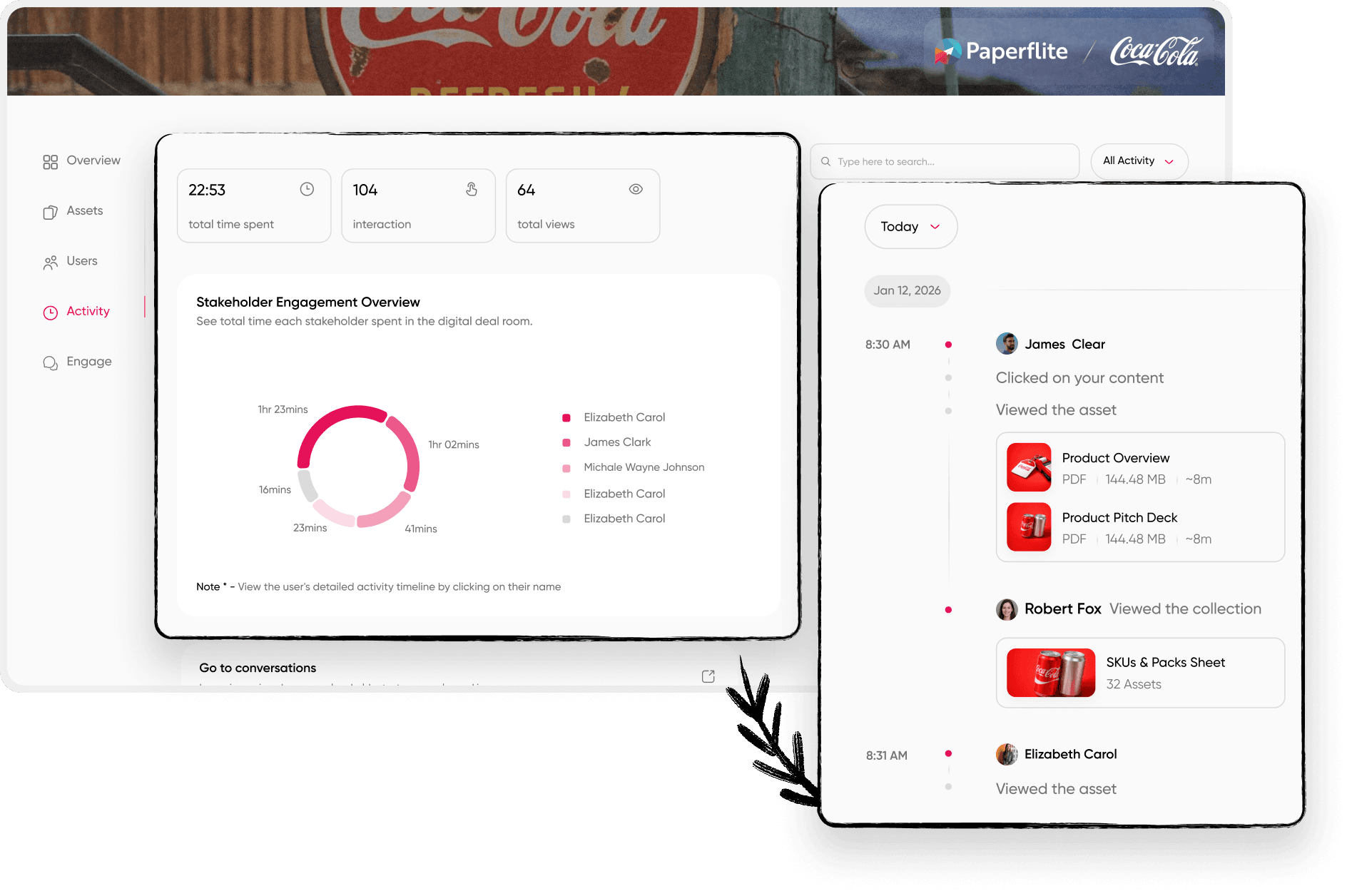
In practice: Freshworks cut its cost per lead by 70% and lifted returning visitors by 26% with a campaign hub, per pf1.ai's Freshworks story. It was built on Cleverstory, Paperflite's interactive content product, which now runs inside pf1 as the Experience agent and the Lead agent.
3. How reps find content, and what gets made next
Seismic's Aura search and recommendations surface content by deal stage. Search and navigation at scale are still the most common complaint in its G2 reviews, per Prospeo's analysis.
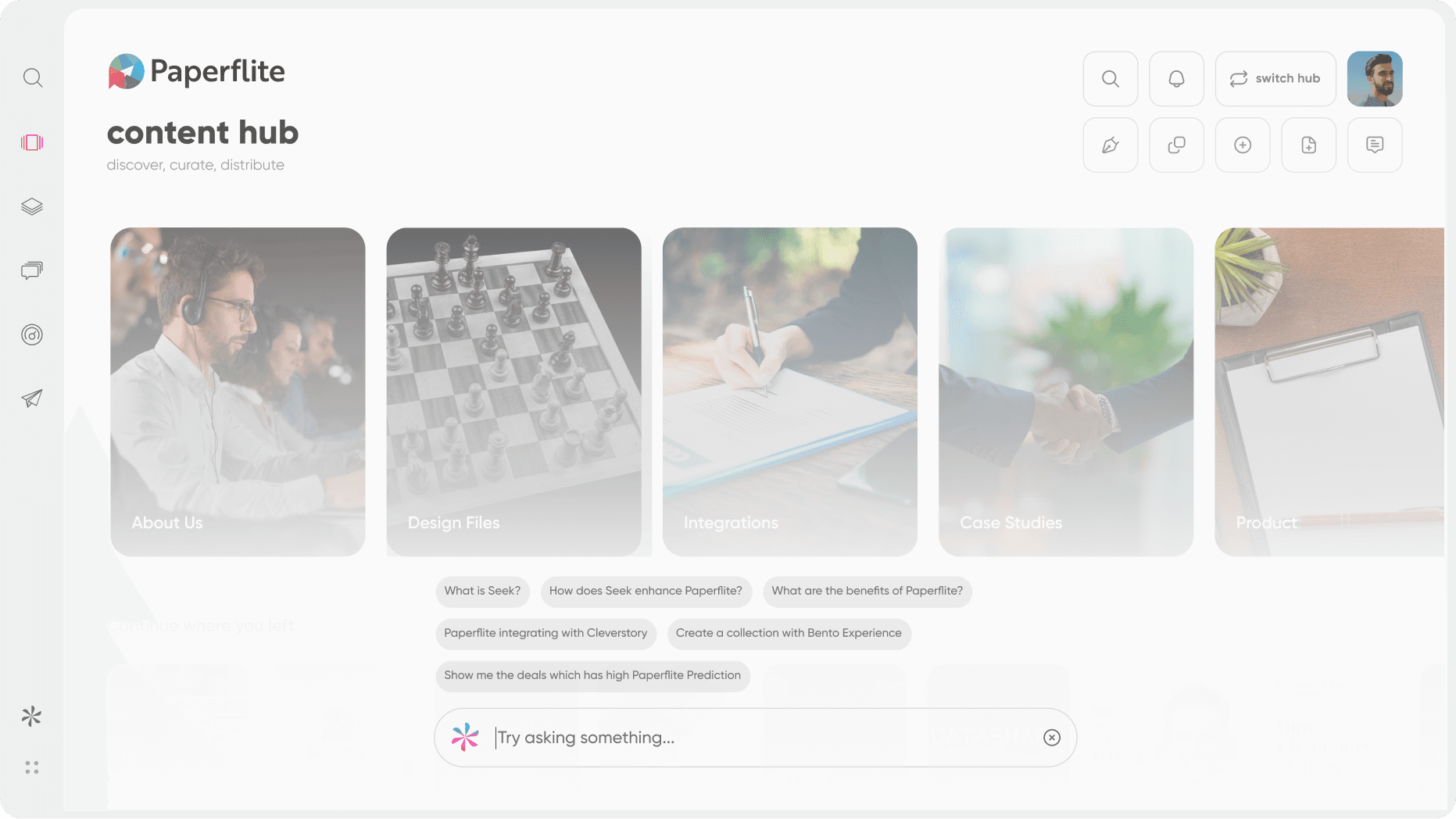
pf1's Knowledge agent surfaces the approved asset and answer in the flow of a deal. pf1 also generates new content for reps from content performance, winning use cases and deal outcomes, so one rep's win becomes a pattern the whole team repeats. For a closer look at search, see our Paperflite vs Seismic AI search comparison.
4. Coaching: a separate module, or the same platform
Seismic Content and Seismic Learning are bought separately, per Seismic's product terms (Nov 2026). Aura adds scenario practice and meeting intelligence on top.
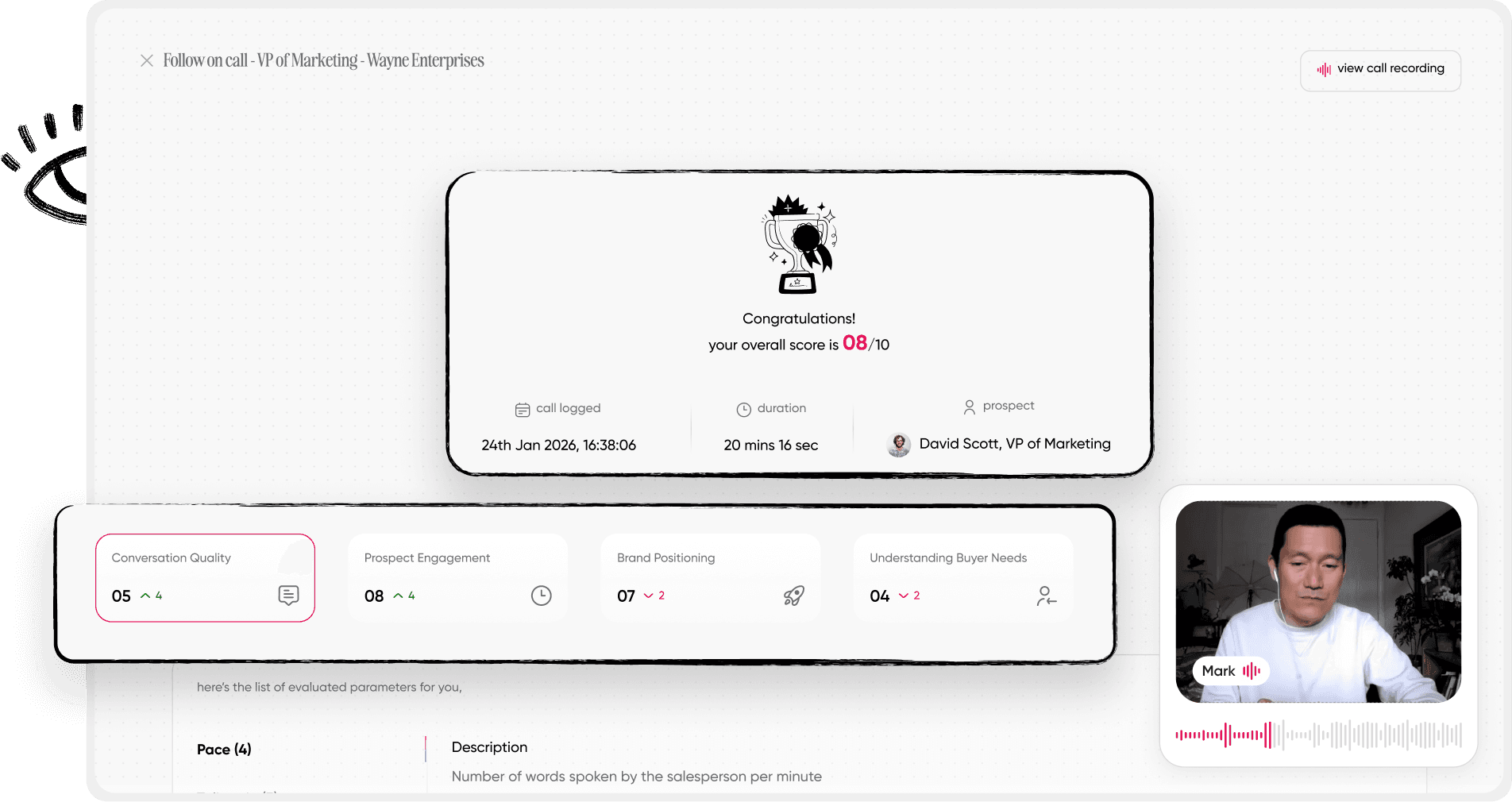
pf1's Coaching agent runs on the same approved content as everything else. It builds roleplays from your own deals and puts the approved answer on screen during live calls. It also tells a knowledge gap from a delivery gap and assigns the short course that closes it.
5. Deal insight: risk flags, or patterns from your own wins
Seismic's Deal Agent pulls CRM activity, meeting recordings, email and buyer engagement into one view and flags risks and next-best actions, per MarketBetter's Shift 2026 recap.
pf1's Deal agent scores deal health against your own won and lost deals, using calls, CRM activity and what buyers read. Deals that start to look like your losses get flagged early.
Seismic vs pf1 features compared
What Seismic and pf1 both do
| Capability | Seismic | pf1 |
|---|---|---|
| Governed content library with approvals and expiration | ✓ | ✓ |
| AI search and content recommendations | ✓ | ✓ |
| Document automation for decks and proposals from CRM data | ✓ | ✓ |
| Learning paths and AI roleplay practice | ✓ | ✓ |
| Conversation intelligence on recorded calls | ✓ | ✓ |
| Answers on screen during live calls | ✓ | ✓ |
| AI deal-risk alerts with next steps | ✓ | ✓ |
| Digital sales rooms with buyer engagement tracking | ✓ | ✓ |
| Employee advocacy on social | ✓ | ✓ |
| CRM integration and an MCP server for AI assistants | ✓ | ✓ |
Where pf1 goes further than Seismic
| Capability | Seismic | pf1 |
|---|---|---|
| Knowledge gaps told apart from delivery gaps | – | ✓ |
| Deal health scored against your own won and lost deals | – | ✓ |
| New rep content generated from what has won: content performance and winning use cases | – | ✓ |
| Company-level identification of website visitors | – | ✓ |
| Marketing assets and pages personalized for each visitor | – | ✓ |
| Content gated by visitor intent | – | ✓ |
| Account-based ad audiences sent to ad platforms | – | ✓ |
Verified as of 18 Nov 2026 against every available source: vendor product pages, help docs and release notes, review sites, independent coverage, our competitive intel and our team's hands-on experience with these tools. A tick means the capability is offered; a dash means it isn't publicly documented.
How much does Seismic software cost compared with pf1?
Seismic doesn't publish prices, so we show what buyers report paying. As of 18 Nov 2026.
| Tool | Reported median a year | Reported range a year | Source |
|---|---|---|---|
| Seismic | $31,950 | $9,021 to $146,160 | Vendr |
| pf1 | Free migration from Seismic. Custom pricing; contact pf1 for a quote | – | pf1 |
The license is only part of a Seismic budget. Independent sources report these costs on top:
- Modules: Seismic Content and Seismic Learning are bought separately, and Seismic Social and LiveDocs Express are add-ons, per Seismic's product terms (Nov 2026).
- Add-ons: the Salesforce Connector runs about $69 per user a year, and Aura Copilot ranges up to $50 or more per user a month, per Prospeo's review of Vendr data.
- Setup: $15,000 to $50,000 or more, three to four months to go live and at least one full-time admin, per Prospeo.
pf1 quotes per team, so ask for a quote that covers the agents you'd use.
Which one fits your team?
Start from the job you need done, not the feature list. If you're weighing more options, see our guide to Seismic alternatives.
| If you need… | Pick |
|---|---|
| Template-driven decks, proposals and client reports at enterprise scale | Seismic |
| Content that finds reps in the flow of a deal and moves it forward | pf1 |
| Strict governance across a very large library, with a team to run it | Seismic |
| Decks, proposals, marketing assets and pages personalized for each buyer, with visitors identified and content gated by intent | pf1 |
| One vendor across Seismic and Highspot by Seismic | Seismic |
| Coaching and deal insight that learn from your own won and lost deals, on the same content | pf1 |
How long does it take to move from Seismic to pf1?
Most teams plan the move around their Seismic renewal. Contracts typically run one to three years, per Prospeo, so start at least a quarter early. Five things set the timeline:
- Content and governance: export the files with their metadata, permissions and expiration dates, so compliance carries over.
- LiveDocs templates: list the ones reps actually use. These become interactive pages in pf1 rather than template copies.
- Learning programs: decide which Seismic Learning paths to rebuild, retire or keep as recordings.
- Live deal rooms: rooms and mutual action plans already shared with buyers need moving before links expire.
- Integrations: Salesforce or HubSpot, SSO and any AI assistant connections need reconnecting.
Moving to pf1 is a different job from a library swap. You bring the approved content you want reps and buyers to use, and pf1's agents build buyer pages, coaching and deal insight from it. Moving from Seismic to pf1 is free.
The bottom line
Seismic is the deeper choice for template-driven document automation and governance across a very large library, if you have the team to run it. pf1 is the better fit when you want content that finds reps, reaches buyers as interactive pages and moves deals forward, with coaching and deal insight on the same approved source.
FAQ
What is Seismic software used for?
Seismic is a sales enablement platform. Teams use it to govern sales content, automate personalized decks and proposals with LiveDocs, track buyer engagement, train and coach reps, and spot deal risk with its Deal Agent. Since August 2026 it also owns Highspot.
How much does Seismic software cost?
Seismic doesn't publish prices. Vendr reports a median contract of $31,950 a year across 349 purchases, with deals from $9,021 to $146,160. Seismic Learning, Seismic Social, the Salesforce Connector and Aura Copilot can add to that.
What's the difference between Seismic and pf1?
Seismic starts from a governed content library, with document automation, learning and deal risk flags around it. pf1 works from your approved company knowledge across the whole journey: website visitors, interactive buyer pages, coaching and deal health scored against your own wins. Moving from Seismic to pf1 is free.
Is pf1 the same as Paperflite?
pf1 is from the house of Paperflite. It brings Paperflite's sales content platform, Cleverstory's interactive content and HeySales' coaching together as AI agents on one platform, working from your approved company knowledge.
Is Highspot part of Seismic now?
Yes. Seismic and Highspot merged on 18 August 2026, and Highspot's product is now Highspot by Seismic. If you're on Highspot today, see our Highspot alternative guide.
Is Seismic worth it for small teams?
For small-scale teams, Seismic's module pricing, setup time and admin needs can be more than they need. Teams that want coaching, content and buyer pages together can ask pf1 for a quote sized to their team.
Can pf1 import our Seismic content?
Yes, and moving from Seismic is free. Bring your approved files with their metadata, permissions and expiration dates. LiveDocs templates become interactive pages, and Seismic Learning paths can be rebuilt as courses on the same content.
Which is better for regulated industries?
Seismic is strong here, with approval workflows, content expiration and Seismic Compliance. pf1 grounds every agent in your approved content, so coaching, live answers and buyer pages all use approved claims, with audit trails and SSO behind them. More on sales content governance in regulated industries.
Sources
Paperflite's Content Technologyin Action
It's Easier Than Falling Off a Log
(Don't Ask Us How We Know That)

